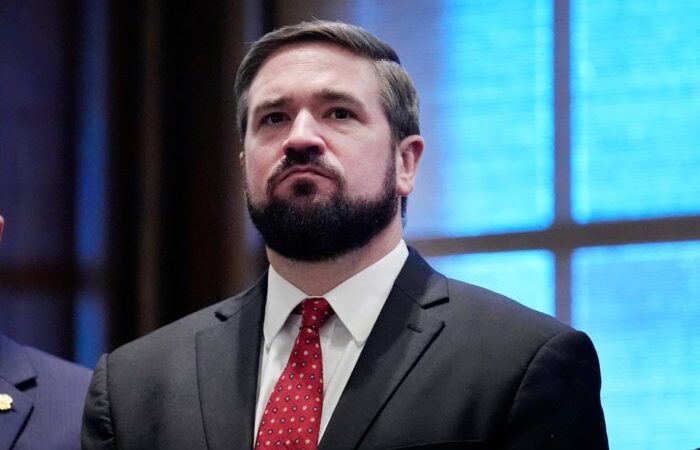
According to Headline USA, in reporting it says was adapted from the Associated Press, Chicago Federal Reserve Bank President Austan Goolsbee warned that bringing inflation back to the Federal Reserve’s 2% target could be “painful,” potentially requiring higher unemployment.
What Goolsbee argued
The outlet reports that Goolsbee, speaking in London, pointed to persistent supply shocks—citing higher oil prices from the “Iran war” and tariffs—as drivers of elevated inflation. In a written copy of remarks quoted by the outlet, he said, “The only way to bring inflation down is to raise rates and narrow the gap between supply and demand.” He added, “Forcing inflation back to target in the short run means pushing employment below target. … In the short run, supply shocks force a difficult trade-off” between the Fed’s inflation and employment goals.
Headline USA also reports that Goolsbee told reporters, “It’s going to be painful. It would necessarily be painful.”
Reported split on labor-market risk
The same report describes a contrast with remarks it attributes to “Fed Chairman Kevin Warsh,” who, after an interest-rate increase, said, “I don’t believe that we need to do harm to the labor markets to achieve our objective.”
What might come next
Headline USA reports that Goolsbee suggested the Federal Reserve may need more than one additional rate hike later this year, depending on whether inflation is being driven more by supply shocks or by demand. The outlet quotes him indicating that if inflation is mostly supply-driven, one more hike could be sufficient, but if demand is the main driver, that likely would not be enough. He also pointed to surging investment in AI data centers as a potential inflation pressure, according to the report.
Context noted by the outlet
The report states that the Fed generally fights inflation by raising rates—moves that have historically slowed growth or triggered recessions—but that in 2022–2023, inflation declined after sharp rate hikes without a significant rise in unemployment or a major slowdown.