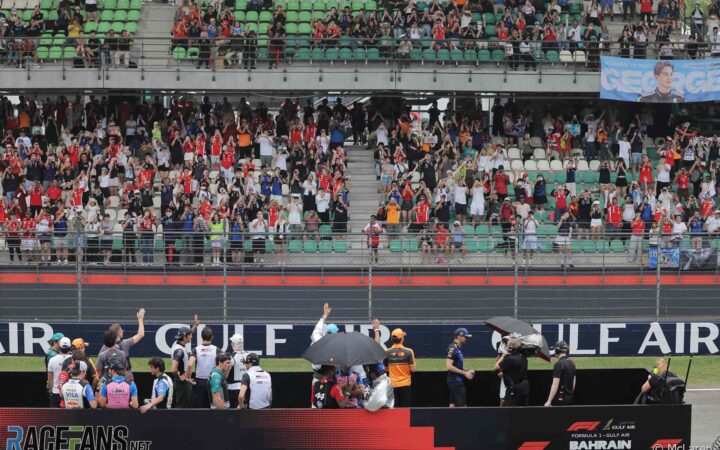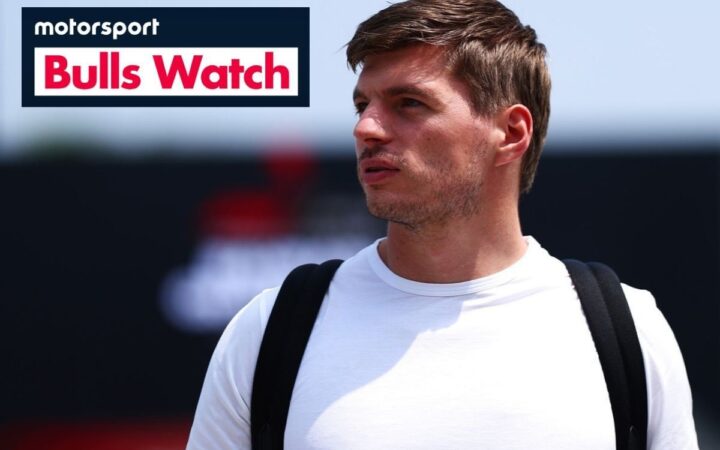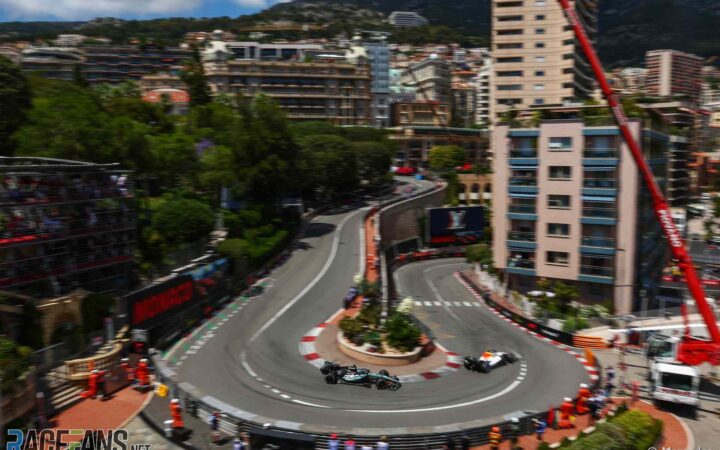
George Russell held off Max Verstappen by 0.196s at the Azerbaijan Grand Prix after a late sprint to the flag. According to Mercedes deputy Formula 1 team principal Bradley Lord, a brief off‑boost moment under double yellow flags on the final lap helped Verstappen close dramatically: “it was like Max was on some sort of massive bungee cord.”
Safety car reset, then a last‑lap scare
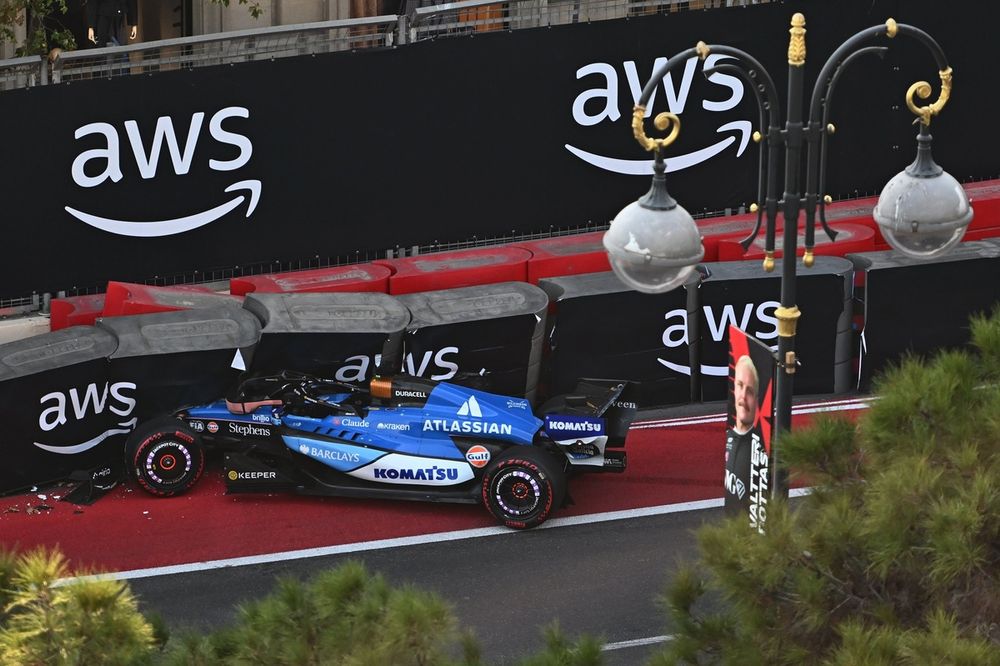
The source reports Russell built a gap of more than 10 seconds early as the Red Bulls of Max Verstappen and Isack Hadjar struggled to pass Oscar Piastri’s McLaren. That changed when a safety car was triggered on lap 31 after Alex Albon hit the wall at Turn 5, wiping out Russell’s lead. Verstappen cleared Piastri at the restart and shadowed Russell to the end.

On the final lap, Valtteri Bottas went off at Turn 15. As Russell slowed for the yellow flags, “George dropped off the boost slightly as well, which sometimes can happen when the car speed drops too low and the engine speed does as well,” Lord said. That let Verstappen latch on and mount one last lunge to the line.
‘Bungee cord’ explained: Sector 2 vs. the slipstream
Per Lord, Russell “would literally put half a second on him every lap through the middle sector,” but Verstappen clawed it back with straight‑line speed and tow. “You look at the GPS trace and suddenly it almost goes vertical as the tow pulls Max back in,” he said. Lord added that even when Verstappen wasn’t close enough to trigger overtake mode, “it almost seemed he was gaining more without overtake mode than with,” calling that “counterintuitive.”
Lord said Mercedes emptied the battery on the last lap (“you can drain the battery from top to bottom”) to defend, and maintained that Verstappen was never close enough to make a real attempt—while noting “one tiny mistake and it could have looked pretty different.”

Where Verstappen gained—and where Russell escaped
The source’s telemetry snapshot of lap 48 shows Verstappen briefly 17 km/h faster between Turns 2 and 3, likely from extra electrical deployment, before Russell’s later lift points and higher apex speeds at Turns 3–4 flipped the advantage. Through the tight middle sector, Russell’s edge peaked around 0.420s and grew again at Turn 15, where later throttle lift pushed the gap near 0.583s.
From Turn 16 to the line, Verstappen reeled Russell in, reportedly up by roughly 11 km/h on the straight and even shifting to top gear earlier. Despite losing about half a second earlier in the lap, Verstappen’s drag‑reduction and tow cut the deficit to 0.003s on that lap comparison, per the source’s figures.
Across the run after the safety car, the source says Verstappen set faster laps than Russell only on laps 42, 43, 44, and 48; otherwise they were usually split by a tenth or less, with Russell 0.183s quicker on the penultimate tour.
Power and aero questions—what the source suggests
The source characterizes Red Bull’s internal combustion engine as “the most powerful on the grid,” linking that to the FIA’s Additional Development and Upgrade Opportunities framework, while saying the Mercedes power unit “is still believed to be superior” as a package. Verstappen and team principal Laurent Mekies “would not be drawn” on how much the Ford‑backed power unit contributed, the source adds. Arvid Lindblad, whose VCARB uses the same unit, called it “a rocketship.”
Given Verstappen’s closing speed when tucked in behind Russell, the source posits that Red Bull may be especially low‑drag when its active aero is in play—something rivals “will no doubt be examining.”
The bottom line
Mercedes’ account attributes the photo‑finish to Russell’s sector‑two pace versus Verstappen’s straight‑line punch—and a final‑lap boost dip under yellows that pulled the fight to the tape. The source describes the 0.196s margin as among the closest, while noting historic timing limitations skew that context.