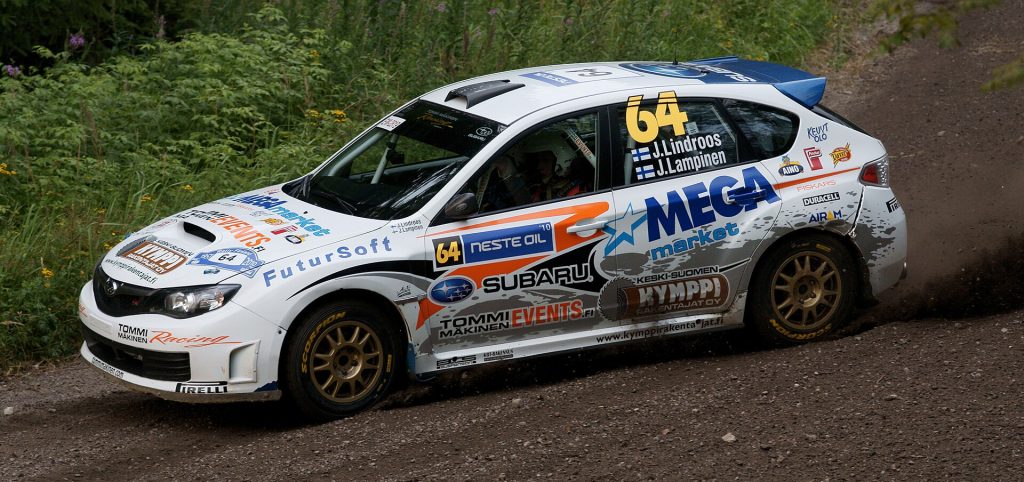
Most forms of motorsport put cars on a closed circuit and let them race wheel to wheel. Stage rallying works differently, and that difference is what makes it so appealing to its fans. In a rally, cars start one at a time, usually a minute or two apart, and race against the clock over closed sections of real roads. Those roads might be gravel forest tracks, narrow mountain tarmac, frozen lanes in Scandinavia or rough, rocky trails in the desert. The crew that covers all the timed sections in the lowest total time wins.
If you have only seen rally clips online, with cars sliding sideways through forests and flying over crests, this guide explains what is actually happening and why the sport is built the way it is.
Special stages and road sections
A rally is made up of two kinds of driving. Special stages are the competitive parts: roads closed to the public, where crews drive as fast as they can and are timed to a tenth of a second. A stage can be as short as two or three miles or longer than twenty. A typical event has somewhere between a dozen and twenty-plus stages spread across several days.
Between stages are road sections, sometimes called transits or liaisons. These are public roads, so rally cars must be road legal, follow normal traffic laws and stay within the speed limit. Crews must reach each time control on time. Arriving early or late brings time penalties. This is one of the quirks that surprises newcomers: a top-level rally car spends a good share of its day driving calmly through towns and villages.
Driver and co-driver
Every rally car carries two people. The driver drives. The co-driver, sometimes called the navigator, reads pace notes aloud during each stage. Pace notes are a coded description of the road ahead: how sharp each corner is, how far it is to the next one, where the crests, jumps, bumps and hazards are. Because crews race on roads they cannot memorize like a circuit, those notes are what let them commit to corners they cannot see.
Co-drivers also handle the time cards, the schedule, the check-ins at controls and much of the strategy. In the sport’s top tier, the partnership between driver and co-driver is often as important as the car.
Recce: learning the road
In most championships, crews are allowed a limited reconnaissance, or “recce,” before the event. They drive each stage at reduced speed in a regular road car, usually only twice, and write their own pace notes as they go. The driver calls out what they see and the co-driver writes it down in shorthand. On the second pass they refine the notes. Some lower-level events and national championships provide organizer-made route notes instead, which levels the playing field for amateurs.
Service and repairs
Rally cars take a beating, so events include scheduled service periods where the team’s mechanics can work on the car. Service is strictly timed. Outside those windows, only the driver and co-driver may work on the car, using the tools and spares they carry. Plenty of famous rally stories involve crews changing a driveshaft or taping a broken radiator in a forest to get to the next service.
Surfaces and why they matter
The same rally car can be set up very differently depending on the surface. On gravel, cars run softer, longer-travel suspension and higher ride height. On tarmac, they sit lower and stiffer with bigger brakes and wider wheels, behaving almost like a circuit car. On snow and ice, studded tires dig into the surface to find grip. Mixed events, where conditions change from one corner to the next, put the heaviest demands on tire choice and driver judgement.
On gravel events, road position matters too. The first cars through a stage sweep loose gravel off the racing line, which tends to help the cars that follow. That is why championships often decide the running order by standings, and why leading on a gravel rally can be a mixed blessing.
How results are calculated
The basic idea is simple: add up the times from every special stage, then add any penalties for things like late arrival at controls or missed checkpoints. The lowest total wins. Many championships now let crews who retire on one day restart the next under a set time penalty, so they can still score points and give spectators more cars to watch.
Some series, including the World Rally Championship, also award bonus points on a final “Power Stage,” a televised stage at the end of the event where the fastest crews earn extra points regardless of their overall finish.
Levels of the sport
Rallying runs from the World Rally Championship (WRC) at the top down to regional clubman events where volunteers organize everything and competitors drive cars they built in their garages. In between sit continental championships such as the European Rally Championship and national series. In the United States, the American Rally Association (ARA) runs the national championship and regional series on forest roads from Michigan to Washington.
The car classes follow a similar ladder. The FIA’s “Rally Pyramid” runs from Rally5 entry-level cars up through Rally4, Rally3 and Rally2, with Rally1 at the top of the WRC. National championships add their own classes based on drivetrain and how much a car has been modified.
Why people love it
Rallying asks a lot of its competitors. They have to be fast on surfaces that change from corner to corner, keep the car in one piece over hundreds of miles, and trust their notes on blind crests. For spectators, it is one of the few major motorsports where you can stand in a forest a few yards from a world-class car going flat out. You have to be in a safe, designated area, and we cover that in our spectator guide.
It is also one of the most accessible forms of the sport to take part in. Many current national competitors started out volunteering as marshals, navigating a friend’s car or doing low-cost events like RallyCross. If you are curious, the best first step is to go and watch a stage rally in person. Once you hear a rally car arrive through the trees before you see it, you will understand the appeal.
