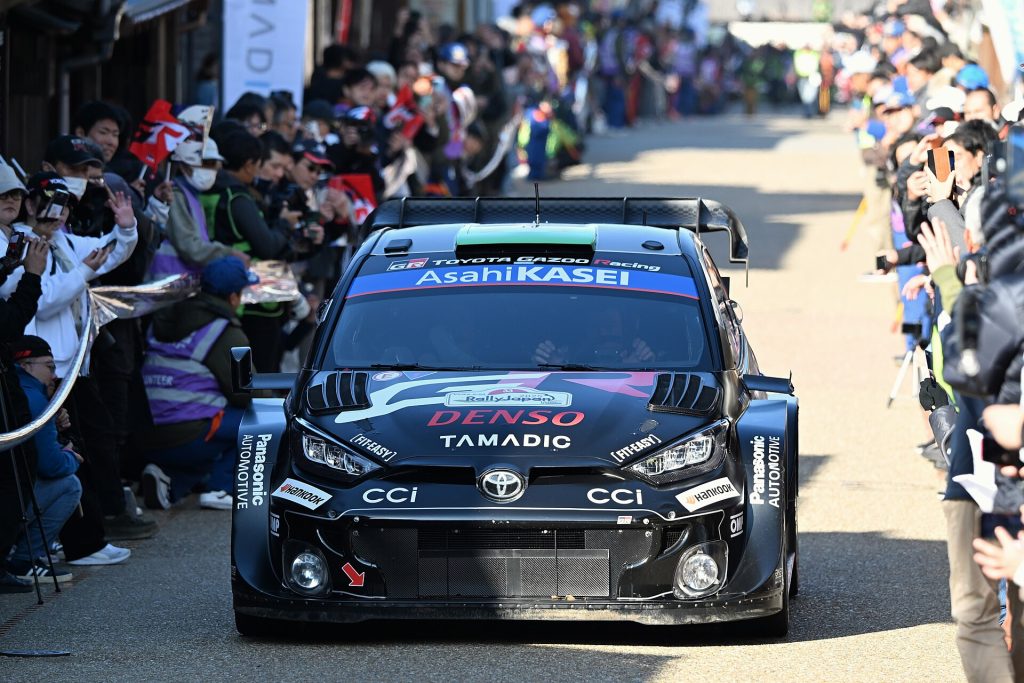
The cars at the top of the World Rally Championship look like hot hatchbacks you could buy at a dealership, but underneath they are purpose-built competition machines. Since 2022 the top category has been called Rally1. The rules brought new safety standards, a simpler mechanical layout and, for its first three seasons, hybrid power. Here is a plain-language guide to how these cars are put together.
Why the rules changed in 2022
From 2017 to 2021 the World Rally Championship used a generation of World Rally Cars that were extremely fast and aerodynamically aggressive. They were also expensive to design and develop. When the FIA drew up the Rally1 regulations, the aims included cutting costs, improving safety and introducing technology relevant to the wider car industry.
The manufacturers that entered Rally1 at the start were Toyota with the GR Yaris Rally1, Hyundai with the i20 N Rally1 and M-Sport Ford with the Puma Rally1.
The spaceframe chassis
One of the biggest changes was the move to a tubular spaceframe chassis. Previous top-level rally cars were based on a strengthened production bodyshell. Rally1 cars instead use a steel tube frame designed to strict FIA safety specifications, with the body panels shaped to look like the road car. The frame forms a safety cell around the crew and allows more effective impact protection, particularly from the side.
Because the frame is built for competition rather than adapted from a road car, manufacturers have greater freedom over the body shape. That is how a compact crossover like the Ford Puma can be turned into a rally car.
Engine
Rally1 cars use 1.6-liter four-cylinder turbocharged engines. The air intake is restricted to control power, and the regulations define limits on boost and other parameters. Power output is generally quoted at around 380 horsepower or more depending on the configuration.
Since 2022 the championship has used a fossil-free sustainable fuel blend, as part of its effort to reduce the environmental impact of the sport.
Hybrid power, 2022 to 2024
For its first three seasons, Rally1 combined the combustion engine with a plug-in hybrid unit supplied by Compact Dynamics. The system provided an extra 100 kilowatts, or about 134 horsepower, in short bursts. Drivers could deploy the boost by accelerating after braking, with the amount and pattern of boost controlled by maps that teams chose for each stage. The battery recharged through regenerative braking and could be plugged in at service.
The hybrid unit also allowed cars to run in electric-only mode in certain areas, including some road sections and service parks.
The hybrid units were dropped from Rally1 cars for the 2025 season. The governing body cited cost savings, and the decision also cut the cars’ weight. With the engine as the only power source, the cars became simpler to run.
A simpler drivetrain
The Rally1 rules deliberately simplified some mechanical systems to save money. The cars use mechanical front and rear differentials rather than complex active center differentials. The gearbox is a five-speed sequential, operated by a lever rather than paddles. Suspension travel was reduced compared with the previous generation.
Aerodynamic devices are also more restricted than on the 2017 to 2021 cars. The cars still carry large rear wings and front bumper elements, but the most elaborate aero components were banned.
Tires and setup
Like the rest of the World Rally Championship field, Rally1 cars use tires from a single supplier, with different ranges for gravel, tarmac and snow. Teams have a limited allocation of tires for each event, so choosing which compounds to carry on each loop is an important strategic decision. Setup also varies hugely by surface: on gravel the cars run higher, softer suspension, while on tarmac they sit lower and stiffer on wider wheels with larger brakes.
Safety features
Safety is a big part of the Rally1 story. The spaceframe chassis was designed to absorb energy more effectively in side impacts, one of the most dangerous types of rally crash. The cars also use FIA-approved seats, harnesses and fuel cells. While the hybrid units were in use, the cars carried warning lights that showed whether the high-voltage system was safe to touch after an accident, and marshals and crews were trained to check those lights.
Why it matters to fans
For spectators, Rally1 cars are still among the fastest rally machines ever built. They can be extremely quick on both gravel and tarmac. The changes in the rules, from spaceframes to the end of hybrid power, show how the sport balances speed, cost and safety.
The regulations are also designed to make it easier for new manufacturers to enter, since the spaceframe approach allows more freedom in body design. The FIA has been working on further regulation changes for later seasons with the same goals in mind.
Whether you watch on television or from a spectator area in a forest, understanding what is under the bodywork makes it easier to appreciate how much engineering goes into each run through a stage.